Private Pilot License Requirements FAQ: Top 16 Questions Answered
Published by:
Madison Barber
Published on:
Updated on:
Read time:
8 min read
Most people who dream about flying assume the rulebook is impenetrable. You search for private pilot license requirements and get blasted with federal code citations, confusing medical classifications, and conflicting flight hour estimates.
It feels like you need an aviation law degree just to figure out what it takes to fly a Cessna on a sunny Saturday afternoon over North Texas.
Here is the plain truth: earning your private pilot certification is a structured, step-by-step apprenticeship. Tens of thousands of everyday people, including teachers, accountants, contractors, and college students, earn their wings every year.
To cut through the noise, our flight instructor team at Bird Dog Flight Services compiled this comprehensive FAQ guide answering the top flight training questions aspiring pilots ask us every week at Hicks Airfield (T67) in Fort Worth.
What Are the Requirements for a Private Pilot License?
Under Federal Aviation Administration (FAA) rules, the baseline eligibility requirements for private pilot certification include:
- Age: Be at least 17 years old on the day of your practical test (you can fly solo at age 16 and start ground training at any age).
- Language: Be able to read, speak, write, and understand the English language.
- Medical: Hold at least an FAA Third-Class Medical Certificate (or meet BasicMed criteria).
- Knowledge Exam: Pass the 60-question FAA Private Pilot Aeronautical Knowledge computer exam with a score of 70% or higher.
- Flight Experience: Log a minimum of 40 hours of flight time under Part 61, including designated dual flight instruction and solo requirements.
- Practical Test: Pass the official FAA checkride (oral examination and flight test) administered by a Designated Pilot Examiner (DPE).
For an exhaustive roadmap of regional flight training in North Texas, explore our comprehensive regional guide: Fort Worth Private Pilot License guide.
Which FAR Contains the Minimum Requirements for a Private Pilot License?
The exact federal regulations governing private pilot certification are codified in Title 14 of the Code of Federal Regulations (14 CFR) Part 61, Subpart E.
Specifically, the governing federal regulations state:
- 14 CFR § 61.103 outlines the general eligibility rules (age, language, and medical certification).
- 14 CFR § 61.105 outlines aeronautical knowledge subjects (weather, aerodynamics, navigation, airspace, and regulations).
- 14 CFR § 61.107 covers flight proficiency maneuvers you must demonstrate to test standards.
- 14 CFR § 61.109 specifies the mandatory aeronautical experience (flight hours) required for single-engine airplanes.
Every certified pilot school structures its ground and flight syllabus around these exact federal benchmarks.
What Are the Flight Hours Requirements for a Private Pilot License?
Federal regulation 14 CFR § 61.109 establishes a strict legal baseline of 40 total flight hours to qualify for a Private Pilot Certificate in a single-engine airplane. That legal minimum must include:
- At least 20 hours of dual flight training with a certified flight instructor, including:
- 3 hours of cross-country flight training.
- 3 hours of night flight training (including one cross-country flight over 100 nautical miles total distance and 10 takeoffs and landings to a full stop).
- 3 hours of flight training solely by reference to instruments (basic attitude instrument flying).
- 3 hours of practical test prep within 2 calendar months preceding the checkride.
- At least 10 hours of solo flight time, including:
- 5 hours of solo cross-country flight.
- One solo cross-country flight of at least 150 nautical miles total distance, with full-stop landings at three points, and one segment consisting of a straight-line distance of more than 50 nautical miles.
- 3 takeoffs and landings to a full stop at an airport with an operating control tower.
Real-World Flight Hours vs. Minimums
While the legal minimum is 40 hours, the national average across the United States sits between 55 and 65 flight hours. At Bird Dog Flight Services, our students benefit from training out of Hicks Airfield, where you avoid costly 20-minute taxiway holds common at congested towered airports. Every minute on our Hobbs meter is productive stick-and-rudder instruction.
To see how these flight hours translate into practical stages, review our detailed guide on the Part 61 training syllabus to plan your schedule.
What Are the Medical Requirements for a Private Pilot License?
To exercise the privileges of a private pilot, you must hold at least an FAA Third-Class Medical Certificate.
This medical clearance is issued by an Aviation Medical Examiner (AME), a licensed physician certified by the FAA to conduct pilot physicals. During the exam, the doctor checks your:
- Distant and near vision (must be correctable to 20/40 or better).
- Hearing ability.
- Blood pressure and cardiovascular health.
- General neurological and mental health history.
You do not need a medical certificate to begin dual flight lessons with an instructor. However, you must hold a valid medical certificate before your first solo flight. We always advise new students in Fort Worth to schedule their AME exam during their first two weeks of training so paperwork never delays flight progression.
What Is the Difference Between a Student Pilot Certificate and Private Pilot Certification?
A Student Pilot Certificate is an entry-level credential you apply for through the FAA’s Integrated Airman Certification and Rating Application (IACRA). It allows you to fly solo once your flight instructor provides the required endorsements in your logbook.
Key practical differences include:
- Student Pilot: Cannot carry any passengers. Cannot fly for compensation or hire. Can only fly solo under specific endorsements, weather limits, and routes authorized by your instructor.
- Private Pilot: Can carry passengers anywhere in the country. Can fly day or night under Visual Flight Rules. Can split pro-rata operating expenses (fuel and rental fees) with passengers. Can fly into any civilian airspace system.
Think of a student certificate as your learner’s permit, while private pilot certification is your official, permanent pilot license.
What Ground School and Aeronautical Knowledge Is Required?
Flight training is half in the airplane and half on the ground. Before you can take your practical test, you must pass the FAA Private Pilot Airplane (PAR) Knowledge Test.
This 60-question computer exam tests your operational knowledge across essential aviation disciplines:
- Federal Aviation Regulations (FARs) and airspace classifications.
- Aviation weather reports, forecasts, radar imagery, and hazardous weather avoidance.
- Basic aerodynamics, weight and balance calculations, and aircraft systems.
- Navigation using sectional aeronautical charts, pilotage, dead reckoning, and GPS/VOR avionics.
- Aeronautical Decision Making (ADM), risk management, and emergency procedures.
You can study through structured home-study video courses or complete one-on-one ground sessions directly with our team. Once you consistently score 85%+ on practice exams, your instructor provides an endorsement to take the official exam at an FAA testing center.
How Do You Prepare for the Private Pilot Checkride?
The culminating step of your training is the FAA practical test, universally known as the checkride. The test is administered by a Designated Pilot Examiner (DPE) and consists of two parts:
- The Oral Exam (Ground Portion): A 1.5 to 2.5 hour scenario-based discussion where the examiner evaluates your cross-country flight planning, weather analysis, aircraft performance limitations, airspace rules, and systems knowledge.
- The Flight Test (Practical Portion): A 1.0 to 1.5 hour flight where you demonstrate private pilot maneuvers within the tolerances set by the FAA Airman Certification Standards (ACS), including steep turns, slow flight, stalls, emergency descent, engine failure simulations, and precision takeoffs and landings.
To see exact examiner questions and how to pass on your first attempt, read our detailed guide to FAA checkride preparation before your exam.
How Much Does Earning a Private Pilot License Cost in Fort Worth?
Total flight training investment depends on the aircraft rental rate, instructor hourly fee, and the number of flight hours you take to reach test standards.
At Bird Dog Flight Services, our private pilot training starts at ~$11,000. That realistic investment covers:
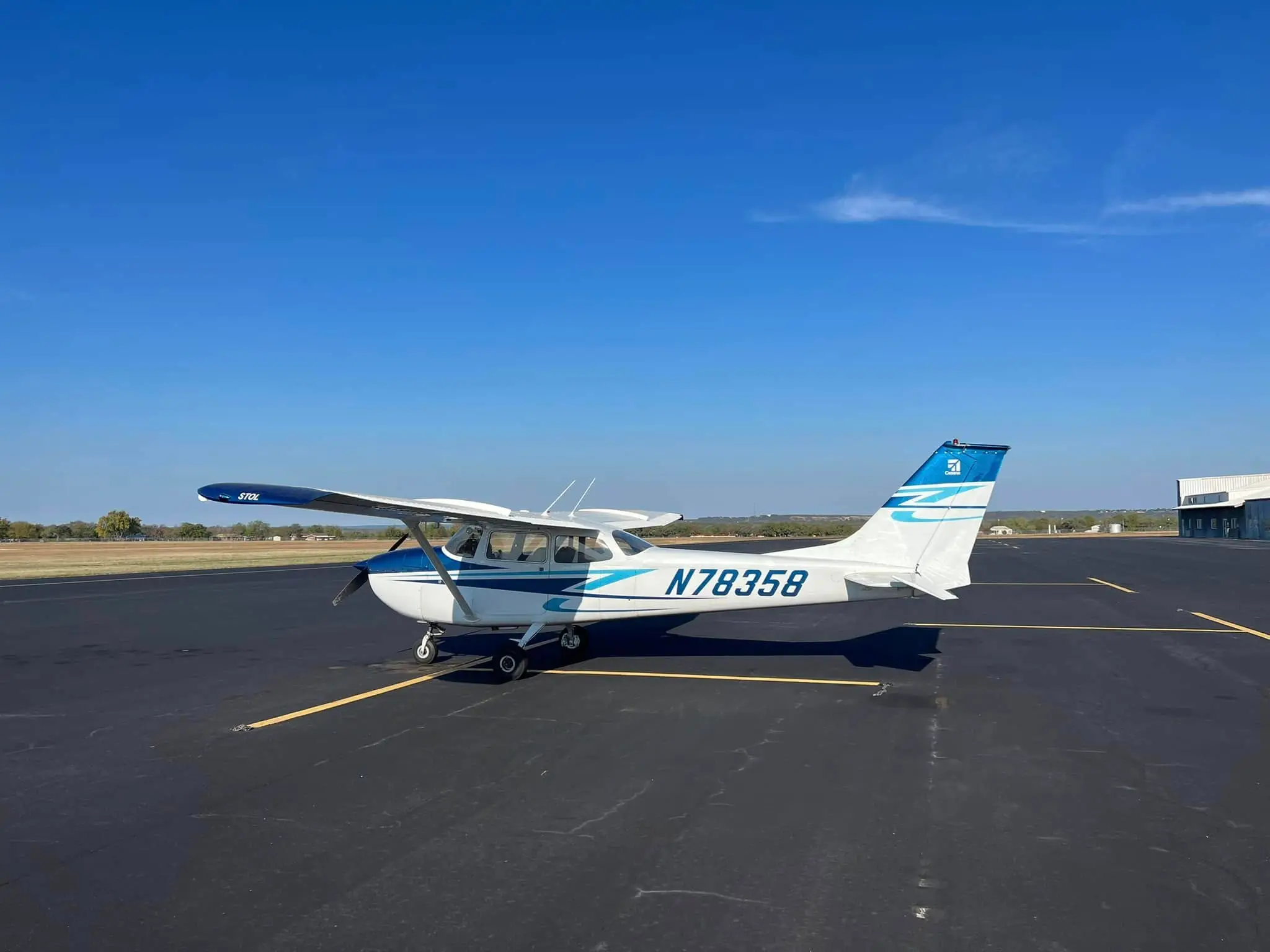
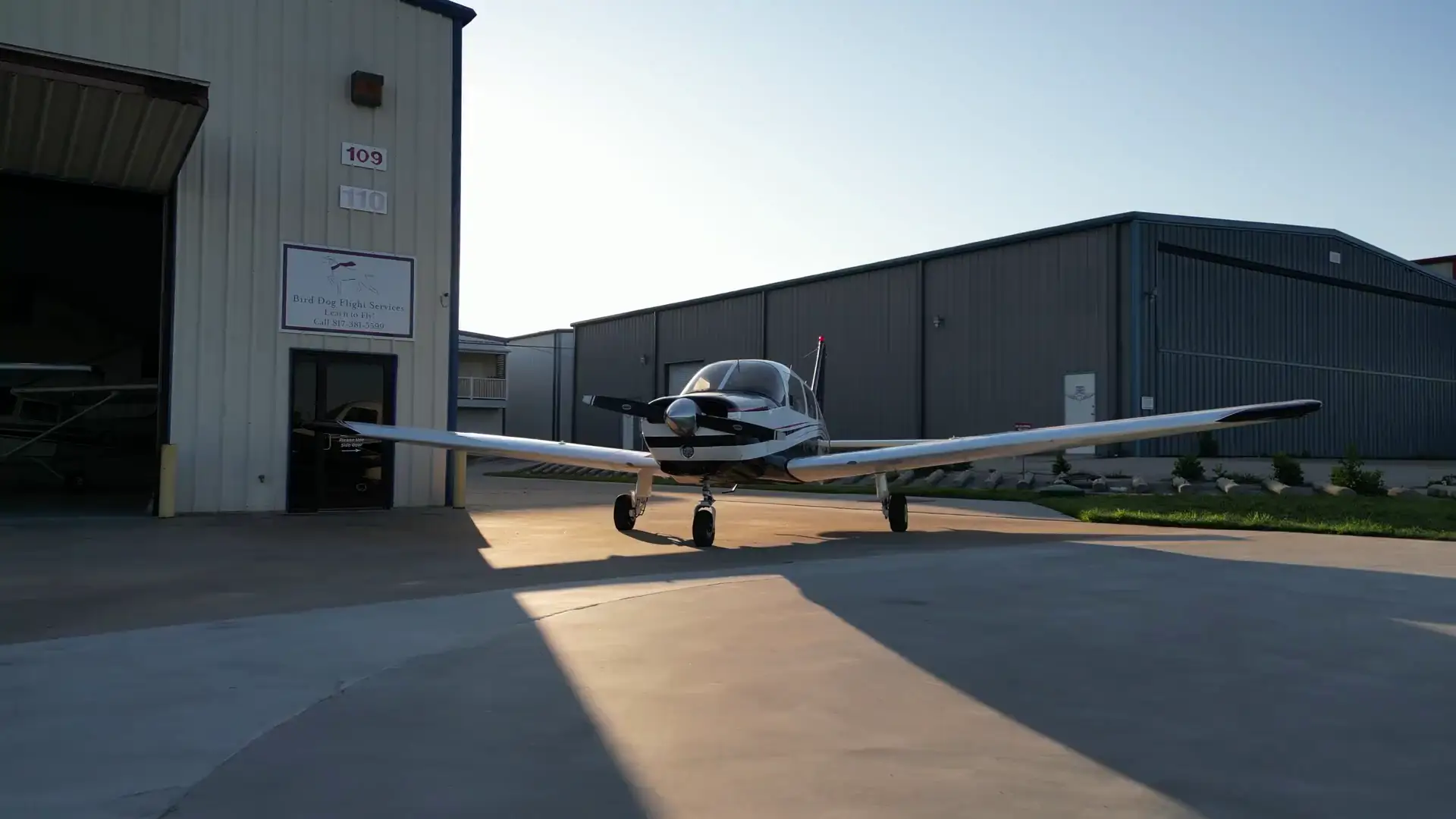
- Aircraft rental (Hobbs time) in our Cessna 172 or Piper Warrior fleet.
- Dual flight instruction and pre/post-flight ground briefings.
- Headset, sectional charts, plotter, and digital flight planning software.
- FAA written exam testing fee (~$175) and DPE checkride fee ($800 to $1,000 paid directly to the examiner).
We believe in complete financial transparency: you pay per lesson as you fly, with zero upfront package commitments. For students looking to finance their training, we partner directly with flight training financing options through Stratus Financial to offer flexible monthly payment schedules.
Can I Train for a Private Pilot License While Working a Full-Time Job?
Yes. In fact, over 70% of our student pilots at Hicks Airfield train while balancing full-time careers or family responsibilities.
Because we operate under FAA Part 61, our syllabus is completely self-paced and flexible. You can fly early mornings before work, evenings, or dedicated weekend slots. Flying two to three times per week allows part-time students to complete their license smoothly in 4 to 6 months without taking a leave of absence from their job.
What Are the Next Steps After Private Pilot Certification?
Once your examiner hands you your temporary airman certificate, the entire sky opens up. Many of our graduates use their private pilot license to fly friends to regional weekend destinations like Austin, Fredericksburg, or Hot Springs.
For pilots with career ambitions, your private license serves as the mandatory first building block toward advanced ratings, including the Instrument Rating, Commercial Pilot Certificate, and flight instructor certifications.
If you are ready to stop wondering and start flying, the best first step is getting into the cockpit. Schedule an introductory Discovery Flight at Hicks Airfield to take the flight controls for the first time and log your very first hour toward your Private Pilot License with Bird Dog Flight Services.