Part 61 Private Pilot Training Phases: From First Flight to Certification
Published by:
Madison Barber
Published on:
Updated on:
Read time:
8 min read
When aspiring aviators begin researching flight schools, the flight training process often looks like an intimidating black box. You know you start as a beginner on the ground, and you know you end up with an FAA certificate in your wallet, but the path between those two points can feel mysterious.
At Bird Dog Flight Services, we believe flight training should never feel like a guessing game. We structure our private pilot licence training under Federal Aviation Administration (FAA) Part 61 rules at Hicks Airfield (T67) in North Fort Worth.
Part 61 gives you the ultimate training flexibility. Rather than being trapped in a rigid, university-style semester schedule, your training is completely individualized to your schedule, learning speed, and budget.
To help you visualize your journey into the cockpit, here is the complete, phase-by-phase breakdown of what you will master from your very first flight lesson to checkride day.
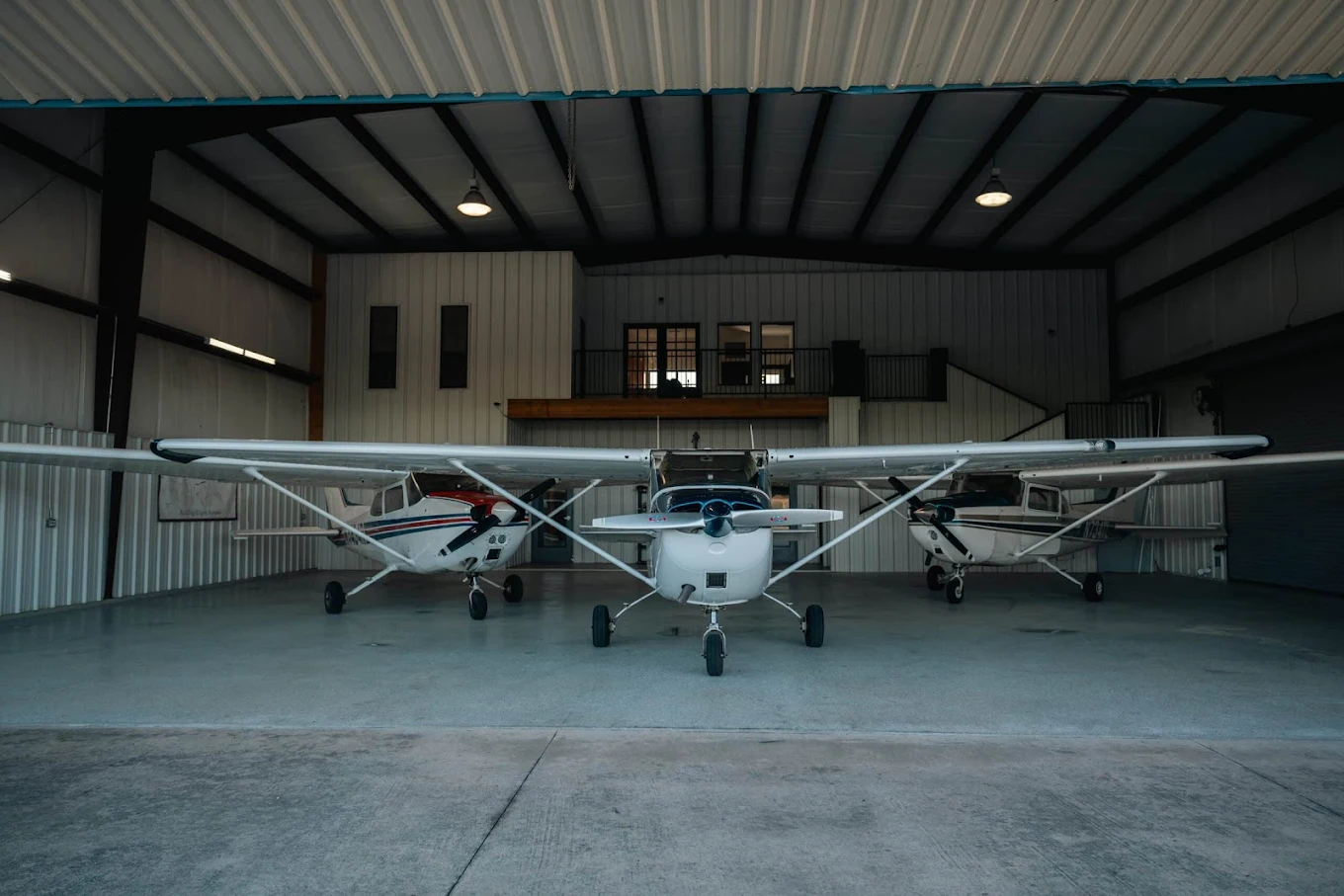
Phase 1: Pre-Solo Flight Foundations & Aircraft Control
The opening phase of your training transforms you from an aviation enthusiast into a capable student pilot who handles the aircraft with real-world stick-and-rudder confidence.
During your first 10 to 15 flight hours, you and your dedicated flight instructor focus on core airmanship fundamentals:
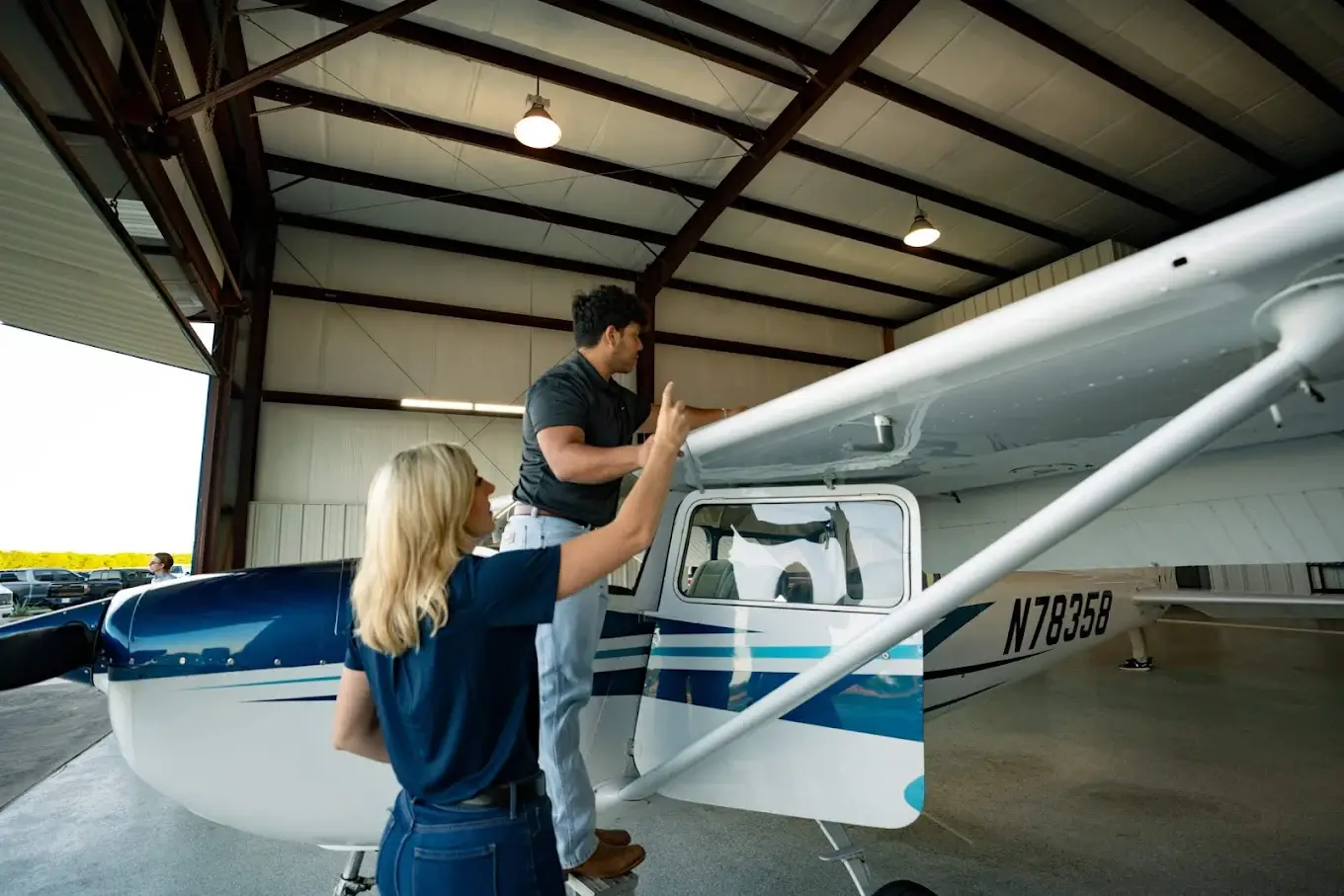
- Pre-Flight Inspections: Mastering the physical walk-around, fuel sampling, engine oil checks, control surface freedom, and cockpit setup.
- The Four Flight Fundamentals: Developing precise muscle memory for straight-and-level flight, climbs, descents, and coordinated turns.
- Slow Flight & Stall Recovery: Learning to fly the airplane safely at minimum controllable airspeed, recognizing aerodynamic stall buffets, and executing prompt, disciplined recoveries.
- Ground Reference Maneuvers: Flying turns around a point, rectangular courses, and S-turns across roads to master wind drift correction.
- Traffic Pattern Operations: Practicing takeoffs, crosswind corrections, stabilized approaches, and consistent landings.
At Hicks Airfield, you fly out of an uncongested non-towered runway, meaning you spend your training budget flying real landing patterns instead of burning fuel waiting on taxiways.
The Milestone Every Pilot Remembers: Your First Solo Flight
Before you can fly solo, federal regulation 14 CFR § 61.87 requires you to pass a pre-solo aeronautical knowledge exam covering aircraft systems, local airspace, and weather limits, along with holding an FAA Medical Certificate.
When your instructor sees consistent, safe decision-making across all normal and emergency landing scenarios, the moment arrives:
Your instructor steps out on the ramp, signs your logbook with an official solo flight endorsement, and tells you: “Go fly three full-stop landings. You are ready.”
Taxiing out alone, lining up on Runway 14/32 at Hicks Airfield, and feeling the aircraft accelerate without an instructor in the right seat is a career-defining rite of passage you will carry for the rest of your life.
Phase 2: Cross-Country Navigation & Night Flying
Once you have soloed in the local pattern, your training expands outward across North Texas. In Phase 2, you learn how to use an airplane for its true purpose: travelling long distances safely.
Under FAA rules, a cross-country flight requires landing at an airport more than 50 nautical miles straight-line distance from where you departed.
During this operational phase, you will master:
- VFR Flight Planning: Calculating compass headings, magnetic variation, wind correction angles, groundspeeds, and fuel burn reserves using sectional charts and digital tools like ForeFlight.
- Pilotage & Dead Reckoning: Navigating across Texas landmarks (highways, lakes, and towers) while verifying your groundspeed with a mechanical plotter or flight computer.
- Airspace Navigation & ATC Communications: Interacting with regional radar controllers, requesting VFR flight following, and navigating controlled Class C and D airspaces like Fort Worth Meacham and Waco.
- Night Flight Operations: Completing at least 3 hours of dual night training, experiencing night optical illusions, runway lighting systems, and landing under the Texas night sky.
You will fly both dual cross-country flights with your CFI and complete at least 5 hours of solo cross-country flight, including a mandatory 150-nautical-mile journey landing at three separate airports.
To see all required aeronautical hours and medical criteria for this phase, explore our detailed private pilot license requirements FAQ for complete guidance.
Phase 3: Instrument Basics & Emergency Scenario Training
A private pilot certificate is primarily a Visual Flight Rules (VFR) license. However, the FAA requires every pilot to possess the skills needed to safely escape inadvertent IMC (instrument meteorological conditions).
In Phase 3, you complete at least 3 hours of attitude instrument flying while wearing a view-limiting device (hood):
- Controlling the aircraft solely by scanning the cockpit flight instruments (attitude indicator, altimeter, heading indicator, and turn coordinator).
- Performing straight-and-level flight, standard rate turns, airspeed changes, and recovery from unusual flight attitudes without looking outside.
- Practicing simulated instrument procedures using our FAA-approved Gleim Basic Aviation Training Device (BATD) simulator on-site.
You also drill intensive emergency management procedures, including simulated engine failures after takeoff, off-field landing spot selection, cockpit fire checklists, and electrical system failures.
Phase 4: Mock Checkrides & Practical Test Preparation
The final stage of private pilot training is all about precision, polish, and confidence. In this phase, you fine-tune every flight maneuver to meet the strict standards of the FAA Airman Certification Standards (ACS).
Within two calendar months of your test date, federal regulation 14 CFR § 61.109(a)(5) requires you to complete at least 3 hours of checkride preparation with your flight instructor.
At Bird Dog Flight Services, we conduct rigorous full-length mock checkrides:
- Mock Oral Exam: A senior instructor conducts a realistic scenario-based oral exam in our briefing room, probing your cross-country weather briefing, aircraft weight and balance, airworthiness logs, and airspace knowledge.
- Mock Flight Test: You fly the exact checkride flight profile, including steep turns within 100 feet, slow flight, stalls, simulated engine-out glides, and short-field/soft-field landings.
- Targeted Debriefing: Your instructor reviews any minor deficiencies, ensuring you walk into the official checkride with zero doubts.
To review examiner testing strategies and common oral exam questions, read our complete guide to FAA checkride preparation before test day.
How Long Does Part 61 Training Take in Fort Worth?
Because Part 61 is customized to your personal schedule, your completion timeline depends directly on how frequently you fly:
- Full-Time Track (3 to 4 lessons per week): Motivated students typically finish in 8 to 12 weeks.
- Part-Time Track (1 to 2 lessons per week): Working professionals and students balancing family schedules usually complete their license in 4 to 6 months.
For an exhaustive roadmap of training timelines, regional advantages, and flight school checklists, visit our Fort Worth private pilot license guide.
Launch Your Flight Training at Hicks Airfield
Earning a Private Pilot License is not about memorizing trivia; it is about building the discipline, airmanship, and judgment to command an aircraft safely anywhere in the country.
At Bird Dog Flight Services, our mission is to eliminate the intimidation factor from aviation with dedicated one-on-one instructor mentorship, transparent pay-as-you-go rates, and high-availability training aircraft.
If you are ready to take your first step toward earning your wings, schedule an introductory Discovery Flight at Hicks Airfield today and experience the joy of flying firsthand with Bird Dog Flight Services.